
Historical Background
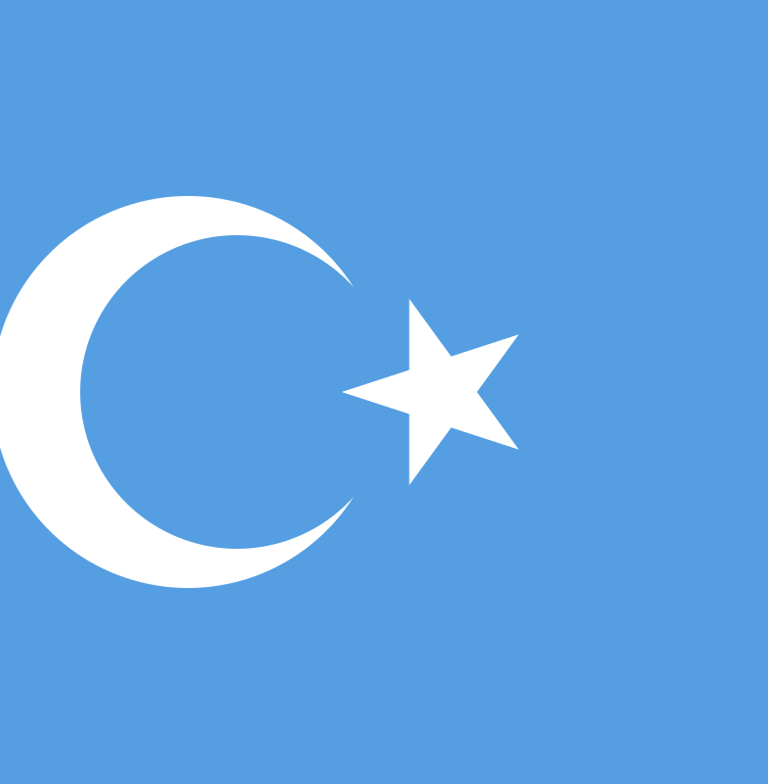
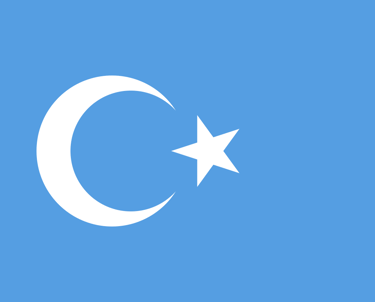
During the start of the 20th century, a national awakening movement began to take shape in East Turkistan which sought to restore the independence of East Turkistan and liberate it from Chinese occupation. After several years of waging a War of National Liberation, this goal was partially realized on November 12, 1933 with the establishment of the first East Turkistan Republic (November 12, 1933- April 16, 1934), in Kashgar. It was on the eve of November 11, 1933 that the sixteen ministers of the RET would unanimously accept the Kök Bayraq (Blue Flag), which had been proposed several months earlier by the East Turkistan Independence Association (ETIA), as the national flag of East Turkistan.
The Kök Bayraq [Blue Flag] was also used as the National Flag of the second East Turkistan Republic (November 12, 1944 – December 22, 1949). Since the occupation of East Turkistan by the People’s Republic of China in 1949, the flag has been banned by Chinese occupational forces.
#0099FF is the official color code for the flag as designated by East Turkistan Government in Exile.
National Flag of East Turkistan
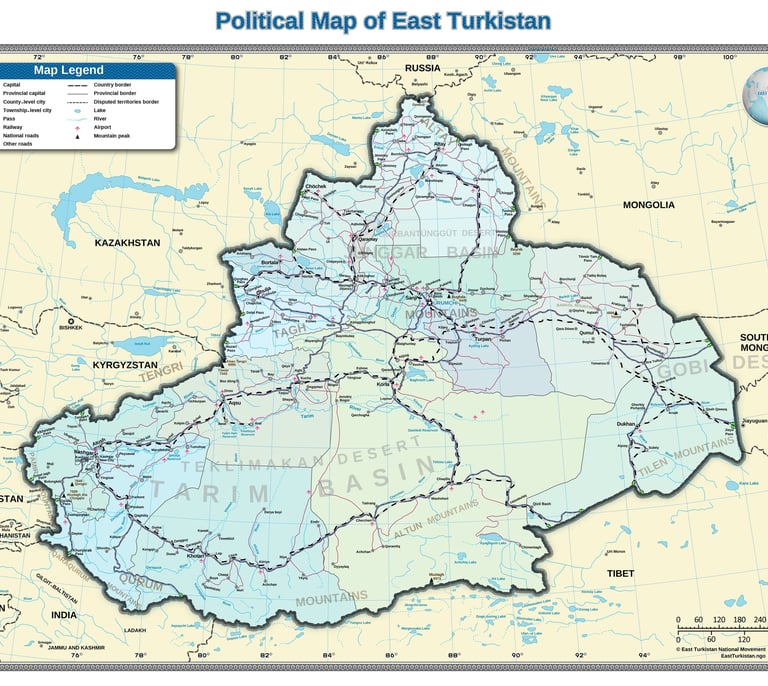
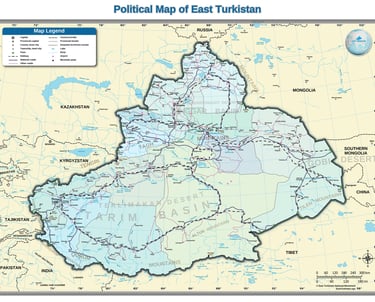
EAST TURKISTAN refers to the whole of of East Turkistan, encompassing the Tarim Basin, Junggar (Dzungar) Basin, and the Kengsu Basin. This area includes the territories currently under Chinese occupation, known as the so-called Uyghur Autonomous Region, along with the Subei Mongol Autonomous County, Aksai Kazakh Autonomous County, Dunhuang City (formerly Dukhan), and Guazhou County in Gansu Province, as well as the Lenghu Administrative Zone and the western portion of the Mangnai Administrative Zone in Qinghai Province. Historically, the Jiayuguan (Jiayu Pass) was the official boundary between East Turkistan and China from ancient times until the Manchu Qing Empire’s conquest of East Turkistan in 1759. The total territory of East Turkistan spans 1,828,418 square kilometers (705,956 square miles).
The Map of East Turkistan

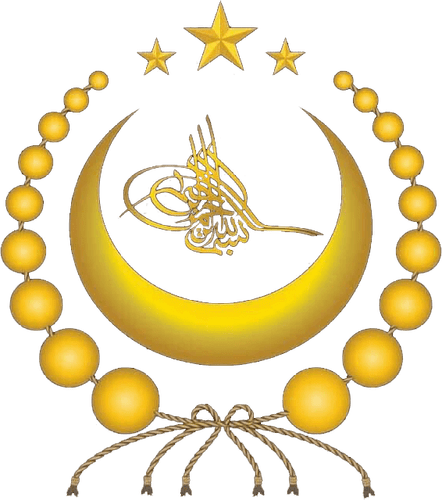
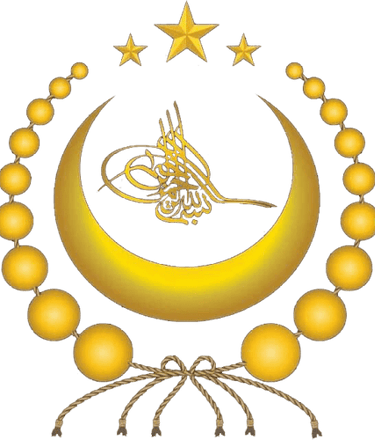
The National Emblem of East Turkistan was unveiled upon the founding of the first East Turkistan Republic on November 12, 1933.
Nine beads on both the right and left of the crescent moon with the Bismillah Calligraphy inscribed in the middle of the crescent. Three stars above the mouth of the crescent with a cord tying the beads together with a knot at the bottom flowing into six branches. The eighteen points represent the 18 Turkic tribes living in East Turkistan, while the three stars symbolize the Köktürk, Uyghur, and Qarakhanid States that were previously founded in East Turkistan.
National Emblem